


The Pleistene age saw the Iberians and later the Britons using baked clay goblets to drink from. The Phoenicians taught the Britons to make a copper alloy giving rise to the Bronze age, timber and bronze tankards came into existence. The Romans introduced silver and pottery goblets characterised by (in the early days of the Roman Empire) by ornate scroll work of pairs of leaves with buds. The Romans also produced some lead goblets.
The 5th century AD saw a shallow cup with a fine stem used by the upperclasses down to sturdy pottery goblets for the lower classes. The invading Saxons from the north brought with them not only fine glassware, gold jewel encrusted goblets but also horns. These, having no legs, had to be finished in one drink so they could be laid down. The horns were also used as titles to property, a legal document in the past.
The 700-800’s AD saw horn and silver flagons used, the Church disallowing horn cups to be used in communion. Wooden tankards were in common use by the late 900’s and clear glass tumblers appeared in the late 1000’s throughout England.
The mid 1300’s had a leather vessel, sewn all round with the join forming a handle with a separate leather base sewn in and lined with pitch to make it watertight called a ‘black jack’ in common use. The ‘black’ came from the lining of the vessel and the ‘jack’ came from a piece of an archers clothing called a ‘jack of defence’, a stout leather jacket. Reference can be found to black jacks as late as the mid 1800’s.
From the middle 1600’s onwards there is no shortage of drinking vessels or names for drinking vessels, some of the more interesting include:
· Piggin—from the middle ages, a small leather cup
· Noggin—small wooden mug around 1/4 pint
· Goddard—pewter vessel used by the church
· Bombard—tall, holding several gallons, richly decorated
· Hanap—a tall, ornate largely ornamental vessel, eventually only used on special occasions and stored in a hanaps basket, hence a hamper
· Tappit-Hen or Stirrup Cup—A tankard with a cup shaped lid originating in Scotland, used to send off guests late at night with a final brew, the lid keeping the brew safe when the guests departed on horseback.
· Fuddling cup—vessel with three or more small cups with interlinked handles and joined through a small hole in the walls, the idea was to drink from one cup without spilling the contents of the others.
· Whistle cup—From the Middle ages, whoever could drink the most for the longest got to blow the whistle as the ‘last man standing’ to order more drink.
· Puzzle jug—Jug with many holes around the neck which have to be closed with fingers and thumbs to make sure you can drink from the top.
· Yard glass—traditionally a quart measure from the mid 1600’s with a bulb at one end which had to be drunk without taking it from ones lips
· Milk jugs—before coffee and tea, mixes of herbs and milk were drunk around the table from a communal jug shaped like a cow, the tail being the handle. This later became a communal wine glass passed around.
· Cocoa nut and ostrich egg cups—both have been made into silver encrusted cups
· Gourd cup—originated in the early 1600’s fashioned in silver to look like a gourd with the stem being the tree trunk
· Toby jugs—can be sailors, priests, policemen or anyone from famous ceramic makers
· Wine tasters—a little silver flat bowl with two handles on each side flat with the top rim. From the Medieval days to taste the contents of bowls to convince guests that nothing was poisoned.
The finest glass was made from the late 17th century to the early stages of the 18th century. The most popular form was a simple goblet with a glass stem.
· Jacobite glass—became common from the 1700’s onwards with each Freemason lodge having it’s own glassware
· Dice glasses—have two dice sealed into the base, used in old taverns to settle who pays for the purchases Last drop glass—featured an engraved man hanging from the yardarm that is not visible till the last drop is drunk.
There is no shortage of quality wine glasses. The most famous being Reidel glasses, specially shaped for each variety to put the wine onto the correct area of the tongue to taste the best. Finally, there are ISO wine tasting glasses. ISO stands for International Standards Organisation. The glasses are made to a particular size, shape and standard for a specific use. Made from fine colourless crystal, it's rounded shape and smoothness gives an ideal relationship between surface area and volume. The tapered bowl allows free circulation of wine and the funnelling of its vapours.
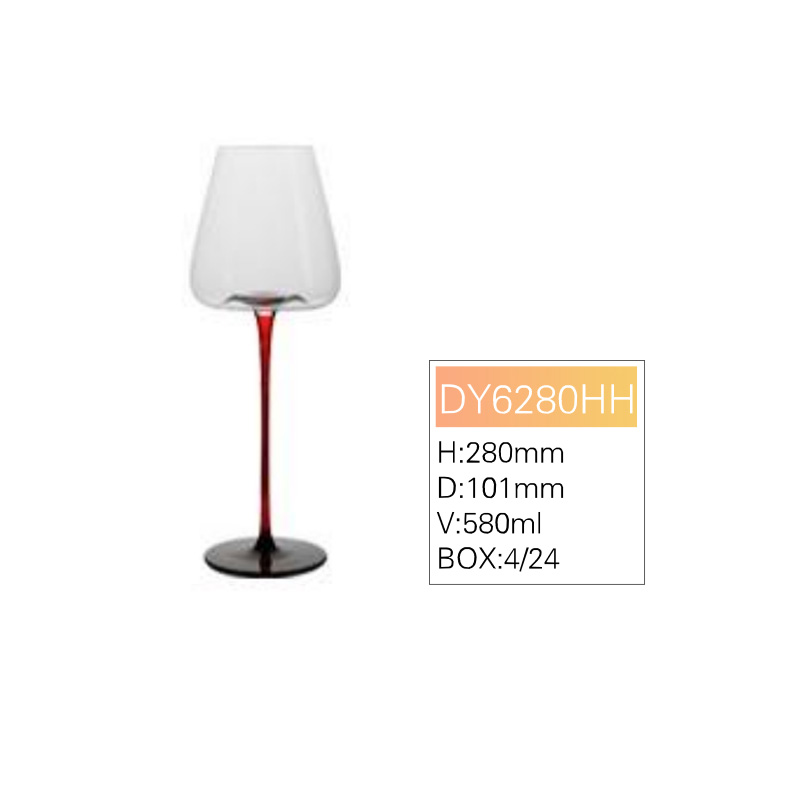 Beyond the Grape: The Delicate Art of Chinese Stemware Craftsmanship
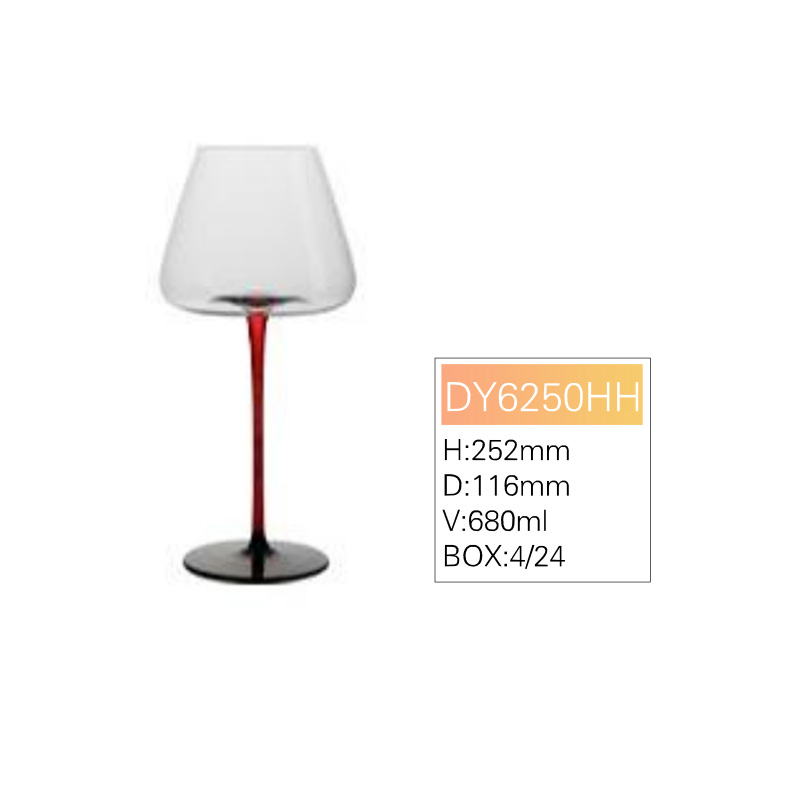 The Art of Color in China‘s Glass Cup Industry
 The Art of Clarity: A Deep Dive into the Craftsmanship of Glassware
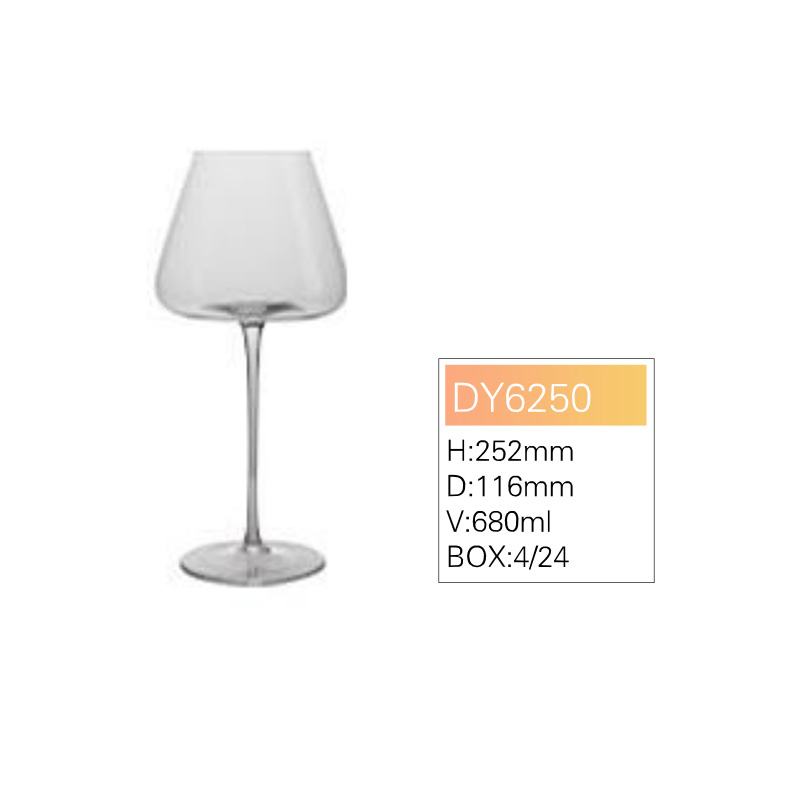 Raise Your Glass: A Guide to Glassware Materials and Types


Guangzhou HeXie Glass Co., Ltd.
Address: No. 22, Building 53, Haotai Hotel Supplies Expo City, Yingbin Road, Luopu Street, Panyu District, Guangzhou
Tel: +86-18011970645
Email: info@hexieglass.com
https://www.hexieglass.com


