The Ancient Chinese County That Breathes Life into Glass: Inside Shanxi‘s Glassware Revolution
Just a few hundred meters away, however, a different kind of revolution is underway. In modern factories, robotic arms and 5G-powered control rooms oversee the seamless production of millions of glass cups destined for tables in Europe, the Middle East, and beyond .
This is the story of how an ancient Chinese county used a blend of heritage and high-tech to become a global glassware powerhouse.
A Legacy Born from the Tea Road
Qixian‘s relationship with glass is not a recent phenomenon. It dates back over 300 years to the era of the illustrious Shanxi merchants, who carved out the "Ten Thousand Mile Tea Road" across Eurasia . As they traded tea for goods, they returned home not just with wealth, but with knowledge—including the intricate art of glass-blowing from regions like Syria .
For generations, this skill was passed down through families. What began as a craft for producing small toys like the “琉璃咯嘣“ (colored glass toys) gradually evolved into an industry. By the end of the 20th century, as the global handmade glass industry shifted towards China, Qixian was perfectly positioned to catch the wave . Today, this small county is responsible for over 60% of China‘s hand-blown glassware, with its products reaching more than 80 countries and regions worldwide .
The “Human-Machine“ Symphony: Smart Transformation
For a long time, Qixian‘s strength was also its limitation. Hand-blowing is an art, but it is slow. A traditional team of artisans could produce only about 3,000 pieces per day . In an era of mass production, how could Qixian scale up without losing its soul?
The answer is a strategy the local government calls “人机并举“ – "promoting both human and machine" .
Visit a modern Qixian factory today, and you will witness a fascinating symphony. Master blowers like Yan Zhiqun, who has seen his daily wage rise from 6 yuan to over 300 yuan in his career, still handle the high-end, bespoke orders—those delicate goblets that can sell for 2,000 to 3,000 yuan (approx. 0) in欧美 markets . Their work is not just labor; it is a performance of intangible cultural heritage.
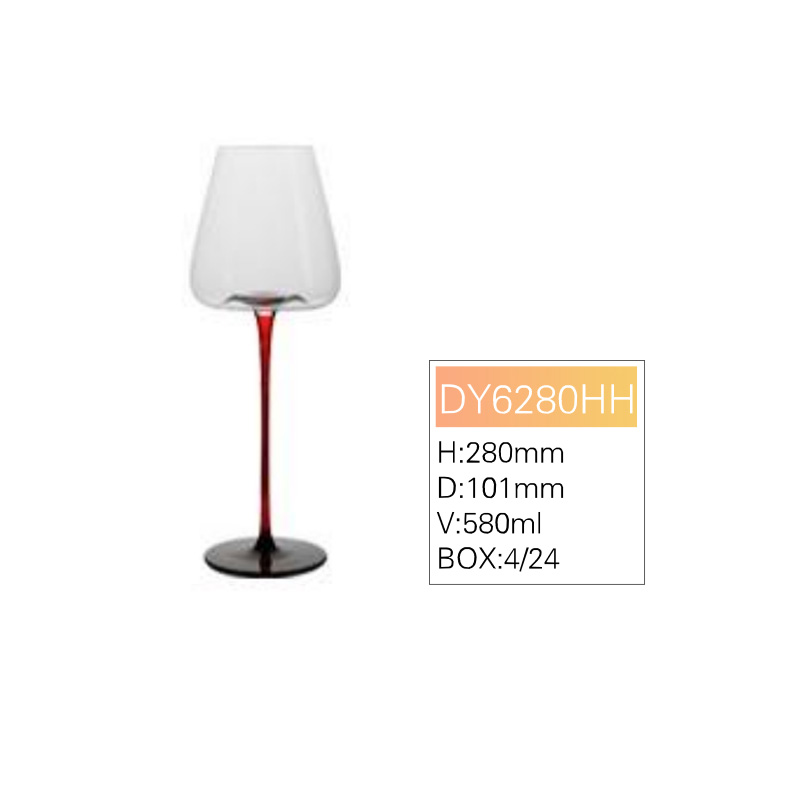
Alongside them, automated production lines hum with efficiency. At Shanxi Dongyu Glass Co., Ltd., a single automated line, monitored by an advanced digital control system, can now produce over 10,000 units a day—more than three times the output of a manual team . Xifulai Glassware was the first in Shanxi to introduce an intelligent production line for borosilicate glass, capable of producing 32 items per minute, or over 70,000 pieces daily .
This "human-machine" synergy is the cornerstone of Qixian‘s success. The machines handle the scale, ensuring consistency and efficiency for bulk orders, while the artisans preserve the artistry, creating unique, high-value pieces .
More Than Factories: Building a Smart Ecosystem
The transformation of Qixian‘s glass industry is not just about what happens inside the factory walls. It is about building a comprehensive ecosystem that supports every link in the chain.
Data Drives Quality: At the National Glassware Quality Supervision and Testing Center in Qixian, what used to take 20 to 30 days for product testing has been slashed to just 10 . This globally recognized certification acts as a “quality passport,“ giving Qixian glass faster access to international markets.
5G on the Factory Floor: Companies like Hongyi Glass have pioneered the use of “5G + Industrial Internet“ platforms. Sensors now monitor pressure, liquid levels, and temperature in real-time . If an issue arises, it is flagged instantly, dramatically improving the quality rate. This digital backbone allows managers to even monitor production data while attending trade fairs overseas .
A Complete Value Chain: Qixian has built a full industrial cluster centered around 62 glass manufacturers, supported by over 230 upstream and downstream businesses involved in everything from mold design and packaging to logistics and e-commerce . This concentration of talent and resources creates a powerful competitive advantage.
From “Made in Qixian“ to “Brand of Qixian“
For years, Qixian glass was the invisible hero, producing high-quality items for foreign brands. Today, that is changing. The push for “branding“ is in full swing.
The numbers tell the story: the industry now boasts over 450 patents and 300 registered trademarks . Local brands are winning global recognition.
· Xizun‘s “Kai Luo Shi“ series was named a top "light luxury brand" by Rayli magazine in 2019 .
· In 2024 alone, Qixian glassware won multiple international design awards, including a German iF Design Gold Award, a Red Dot Award, and a French FDA Gold Award .
This brand power was on full display at the 2025 Chengdu Sugar and Wine Fair, where Qixian companies signed 19 key projects with a total investment of 6.56 billion yuan . These products are no longer just commodities; they are designed objects with a story.
The Human Element: Passing the Torch
With an aging population of master blowers, the industry faced a potential crisis. How do you attract young people to a job that involves standing in front of a 1,300°C furnace?
Qixian is tackling this head-on with innovation in talent cultivation. The county has partnered with Jinzhong College to establish a Modern Glass Industry College, training a new generation of “application-oriented“ talents . They have also launched training programs at the Jinzhong Craftsmanship College and even cultivated over 20 new live-streaming e-commerce hosts to sell glass online .
Entrepreneurs like Zhang Wenlei, who started as a common worker and now runs his own successful company, embody this new energy . The industry is attracting young designers and business minds who see glass not as a dying craft, but as a vibrant field for innovation.
A Global View
Walk into a high-end store in New York, Tokyo, or Dubai, and you might just find a piece of Qixian. From the G20 Summit state banquet and the BOAO Forum to the Qatar World Cup and the Beijing Winter Olympics, Qixian glass has graced the world‘s biggest stages .
In 2025, the momentum is stronger than ever. The industry‘s self-export value grew by over 36% in 2024, and the number of self-exporting enterprises has surged . Companies are no longer waiting for orders; they are actively participating in trade shows from Frankfurt to Chicago, and setting up overseas marketing centers in the U.S. and
Germany .
Conclusion
The story of Qixian‘s glass industry is more than an economic success story. It is a masterclass in how traditional manufacturing can navigate the complexities of the 21st century. By respecting its heritage of craftsmanship while boldly embracing digitalization, automation, and global branding, this ancient county has "blown" itself a brilliant future.
As Qixian continues its journey from a "specialized town" to a global benchmark, one thing is clear: whether shaped by human breath or robotic precision, the glass from Shanxi will continue to dazzle the world.


 The Origin and Evolution of Chinese Wine Glass Craftsmanship
 Avoiding the Red Ocean of Homogeneous Products
 Handmade vs. Machine-Made Glassware: Which One Should You Choose?
 The Unassuming Brilliance of the Glass Cup


